
A burst pipe, an overflowing washing machine, a basement that took on water during a spring thaw or a heavy storm. Whatever the cause, the moment water hits carpet, homeowners across the GTA are left with the same urgent question: is this carpet gone, or can it actually be saved?
The honest answer depends on a few specific factors, and understanding them early can be the difference between a full recovery and a total replacement.
The Clock Starts the Moment Water Hits the Carpet
Carpet and water damage are a race against time. Within the first 24 to 48 hours, standing water and moisture trapped in carpet fibers and padding create the ideal environment for mold and bacteria growth. This window is critical. Carpets that get professional water extraction within that first day or two have a significantly better chance of being fully restored than carpets left to sit wet for several days.
This is why response time matters more than almost any other factor in flood carpet restoration. A slower response doesn’t just mean more visible damage, it means more time for contamination to set in below the surface, where it can’t be seen until it’s already a serious problem.
What Determines Whether Carpet Can Be Saved
Not every water event ends the same way. Several factors decide whether a carpet is salvageable or needs to be pulled up and replaced.
Key factors that affect whether carpet can be restored:
- How long the carpet sat wet before cleanup began
- The source of the water, since clean water from a supply line behaves very differently than water from a sewage backup or flood
- Whether the carpet padding underneath absorbed significant moisture
- The carpet’s age and condition before the water event
- Whether mold growth has already started in the fibers or subfloor
Clean water damage from something like a burst pipe, addressed quickly, is often fully recoverable. Water from flooding, sewage backup, or anything classified as contaminated water is a different situation entirely, and in most of those cases, the carpet and padding need to be removed rather than cleaned, regardless of how quickly the response happens.
Why Padding Matters More Than People Realize
Homeowners often focus entirely on the visible carpet and forget about what’s underneath. Carpet padding acts like a sponge, and once it’s saturated, it holds moisture against the subfloor far longer than the carpet itself. Even if the surface carpet dries and looks fine, wet padding left in place is one of the most common causes of mold problems that surface weeks later, often as a musty smell that seems to come from nowhere.
In most water damage situations, padding needs to be replaced even when the carpet itself can be saved. Attempting to dry saturated padding in place rather than replacing it is one of the most common mistakes homeowners make after a flood. <div class=”scc-cta-widget”> <style> .scc-cta-widget{background:#b91c1c !important;border-radius:8px !important;padding:28px 24px !important;text-align:center !important;margin:32px 0 !important;} .scc-cta-widget p{color:#ffffff !important;font-size:19px !important;font-weight:600 !important;margin:0 0 16px 0 !important;line-height:1.4 !important;} .scc-cta-widget a.scc-cta-btn{display:inline-block !important;background:#ffffff !important;color:#b91c1c !important;font-weight:700 !important;font-size:16px !important;padding:12px 28px !important;border-radius:6px !important;text-decoration:none !important;} .scc-cta-widget a.scc-cta-btn:hover{background:#f3f4f6 !important;} </style> <p>Water damage moves fast. Call now for emergency carpet water extraction in the GTA.</p> <a href=”tel:4375590441″ class=”scc-cta-btn”>Call (437) 559-0441</a> </div>
The Professional Water Extraction Process
A proper flood carpet restoration follows a specific sequence, and skipping steps is where most DIY attempts go wrong.
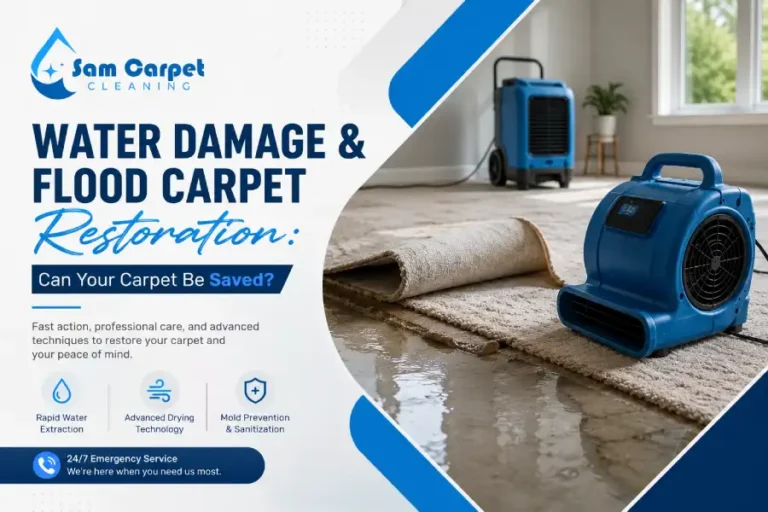
The process starts with standing water extraction using truck-mounted equipment, which removes far more water than a wet vacuum or towels ever could. From there, the carpet and subfloor get assessed for contamination level and structural condition. If the carpet is salvageable, it gets lifted, the padding underneath is removed and replaced, and industrial air movers and dehumidifiers are set up to fully dry both the carpet and subfloor before anything gets put back in place.
Anti-microbial treatment is typically applied at this stage as well, specifically to prevent mold growth in the days following the initial cleanup, since drying alone doesn’t eliminate contamination risk on its own.
Warning Signs the Carpet Is Beyond Saving
Some situations make the decision clear from the start. If any of the following apply, replacement is almost always the more practical and safer choice than attempting restoration.
Signs your carpet likely needs replacement, not cleaning:
- Water sat for more than 48 hours before any response
- The water source was contaminated, such as sewage or floodwater
- There’s already a visible or strong musty odor
- The carpet backing has started to separate or delaminate
- Mold is visible on the surface or underside of the carpet
Trying to salvage carpet in any of these situations usually costs more in the long run than simply replacing it, since the health risk from mold and bacteria outweighs any savings from restoration.
What Homeowners Should Do in the First Hour
The first hour after discovering water damage matters more than any cleaning product or home remedy. Speed and the right first steps make the biggest difference in whether professional restoration will even be possible.
Immediate steps before help arrives:
- Stop the water source if it’s safe to do so, whether that means shutting off a valve or moving furniture out of the affected area
- Remove any items sitting directly on the wet carpet to prevent staining or rust transfer
- Increase airflow with fans or open windows if weather allows
- Avoid walking heavily on saturated carpet, which pushes water deeper into the padding and subfloor
- Call a professional restoration service as soon as possible, ideally within the first few hours
Homeowners insurance in many cases covers water damage restoration, particularly for sudden events like a burst pipe, so it’s worth documenting the damage with photos before cleanup begins.
When to Call a Professional Instead of Handling It Alone
Minor spills or small amounts of clean water can sometimes be managed with a wet vacuum and good airflow. But any situation involving standing water, a soaked carpet pad, or water from an uncertain source needs professional-grade extraction equipment to fully address. Rented equipment and household tools simply don’t generate the suction or drying capacity needed to prevent long-term mold and structural issues.
Getting a professional assessment early, even if it turns out to be a smaller job than expected, is almost always the safer and more cost-effective path compared to waiting and hoping the problem resolves on its own.
If you’re dealing with water damage anywhere in Toronto or the GTA, time matters. Sam Carpet Cleaning offers fast response water extraction and flood carpet restoration, with the equipment needed to assess whether your carpet can be saved and get the job done right the first time. Call now for immediate assistance.